DRAINAGE & CORRUGATED PIPES FOR INFRASTRUCTURE PROJECTS.
Explore drainage pipe options for stormwater management, underground drainage, sewer networks and construction projects. We support B2B purchasing inquiries covering pipe types, dimensions, stiffness classes, project specifications and export requirements.
EXPLORE OUR DRAINAGE PIPE TYPES.
Drainage projects require different pipe structures, materials and installation considerations. Explore common drainage pipe categories and the key specifications to confirm before procurement.
HDPE CORRUGATED
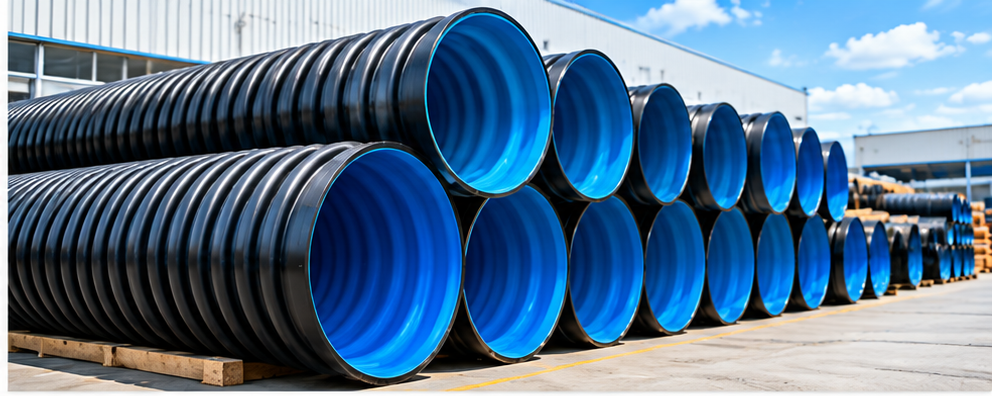
HDPE Double Wall Corrugated Pipes
Double wall corrugated polyethylene pipes are commonly considered for buried gravity drainage, stormwater collection and suitable sewerage applications. Pipe stiffness, dimensions and jointing requirements should match the project design.
PVC-U DRAINAGE
PVC-U Drainage Pipes
PVC-U drainage piping is used in suitable building drainage, underground drainage and non-pressure sewerage applications. Different applications may require different product standards, pipe dimensions and connection systems.
STRUCTURED WALL
HDPE Structured Wall Pipes
Structured wall polyethylene pipe designs are considered for suitable underground drainage and sewer infrastructure projects, including certain larger-diameter networks. Wall structure and product specifications vary by pipe system.
Share Your Drainage Project Requirements
Tell us the drainage application, required pipe diameter, ring stiffness or applicable standard, estimated quantity and destination. We can review your requested product specifications and discuss available options.
UNDERSTAND THE KEY PIPE PARAMETERS.
Drainage pipe selection depends on pipe structure, diameter classification, ring stiffness, installation conditions and jointing requirements. Use this guide to prepare a more accurate technical inquiry.
| Parameter | HDPE Double Wall Corrugated | PVC-U Drainage | HDPE Structured Wall |
|---|---|---|---|
| Material | Polyethylene (PE) | Unplasticized PVC | Polyethylene (PE) |
| Wall Structure | Corrugated outer wall, smooth inner wall | Commonly solid-wall; confirm product design | Profiled or structured wall configuration |
| Diameter Designation | DN/ID or DN/OD, depending on product series | Typically outside-diameter based designation; verify the standard | DN/ID or DN/OD, depending on pipe system |
| Stiffness / Pipe Class | Ring stiffness class such as SN4 or SN8, where applicable | Pipe series, wall thickness or stiffness classification as specified | Ring stiffness class according to the applicable product standard |
| Jointing Method | Coupler or socket with sealing ring, depending on design | Solvent cement or elastomeric seal joints, depending on system | Jointing method varies by product design |
| Typical Application | Buried gravity drainage, stormwater and suitable sewerage networks | Building drainage and suitable underground gravity drainage | Buried drainage and sewer infrastructure |
| Key Purchasing Checks | Diameter series, SN class, wall structure, joint and pipe length | Product standard, diameter, wall series, fittings and joint type | Wall profile, diameter, stiffness, jointing and installation requirements |
Common Drainage Pipe Designations
Nominal Internal Diameter
A diameter designation based on the pipe's internal dimension series. Confirm the actual dimensions and tolerances in the relevant standard.
Nominal Outside Diameter
A diameter designation based on the pipe's outside dimension series. It is important for checking pipe and fitting compatibility.
Ring Stiffness Classes
Common stiffness designations for certain non-pressure drainage pipes, generally referring to nominal ring stiffness values of 4 or 8 kN/m² where defined by the applicable standard.
Connection System
Socket, coupler, elastomeric seal or another specified joint arrangement. Joint compatibility and sealing requirements should be verified.
What Should You Include in a Drainage Pipe Inquiry?
A complete technical inquiry helps clarify the required pipe structure, dimensional classification and project conditions before pricing and supply arrangements are discussed.
- Pipe material and type
- DN/ID or DN/OD series
- Required nominal diameter
- SN class or pipe series
- Applicable product standard
- Jointing and sealing method
- Pipe length and quantity
- Destination and project use
BUILT AROUND REAL PROJECT NEEDS.
Drainage pipe requirements vary across municipal, transportation, utility and industrial projects. Explore common applications and the technical factors buyers should review when selecting a suitable pipe system.
APPLICATION 01
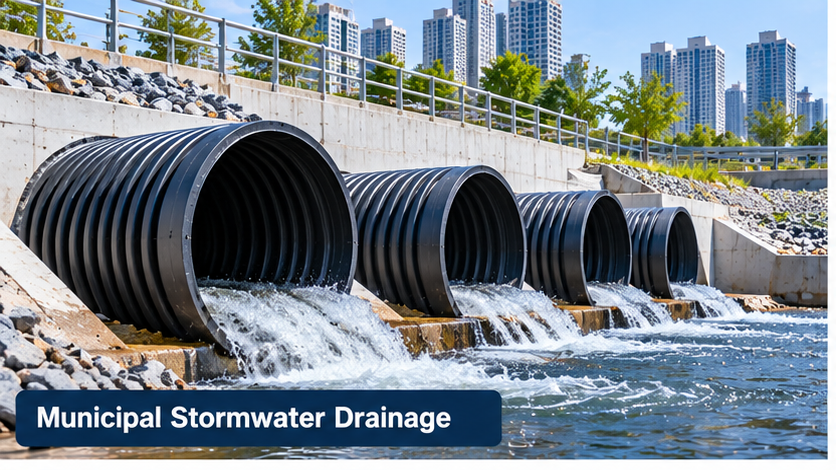
Municipal Stormwater Drainage
Stormwater collection and conveyance networks help manage surface runoff from urban areas, public spaces and infrastructure developments. Pipe sizing and installation should follow the project drainage design.
APPLICATION 02
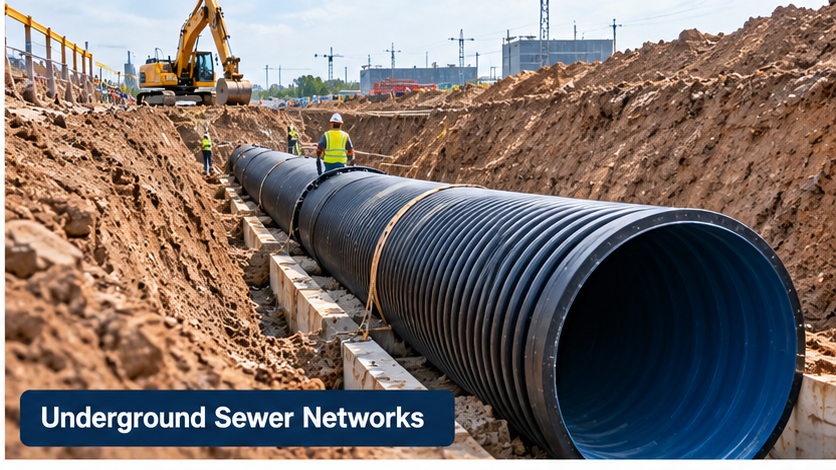
Underground Sewer Networks
Gravity sewer systems require pipe and joint configurations suited to the wastewater characteristics, burial conditions and project standards. Chemical compatibility and leakage performance may be important considerations.
APPLICATION 03
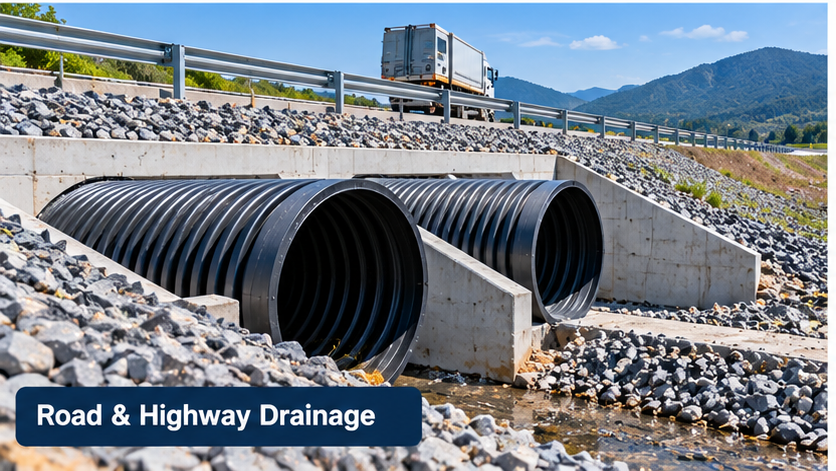
Road & Highway Drainage
Roadside drainage and suitable culvert applications require consideration of soil conditions, traffic loading, pipe cover and installation methods. Pipe suitability must be verified against the engineered design.
APPLICATION 04
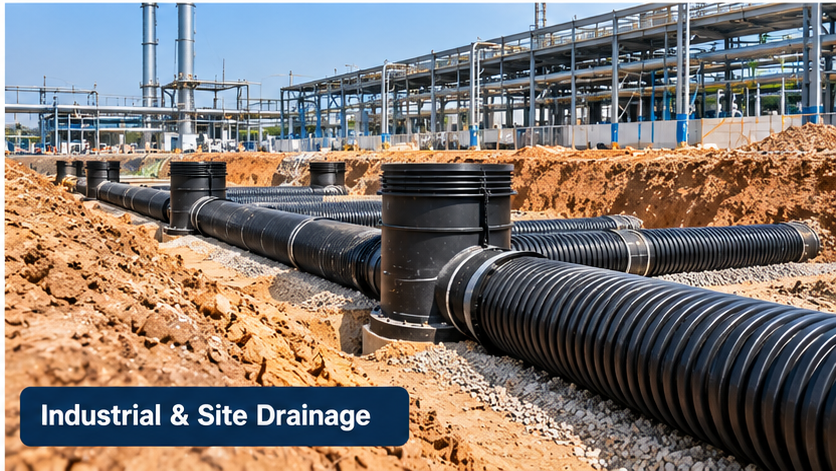
Industrial & Site Drainage
Industrial parks, logistics facilities and commercial developments may require underground drainage networks for rainwater and other approved flows. The conveyed liquid and operating conditions must be assessed before pipe selection.
Have a Drainage Project Specification?
Send us your project application, pipe type, diameter series, stiffness class, required standard, estimated quantity and destination. We can review your inquiry and discuss suitable product options.
TECHNICAL STANDARDS. QUALITY REQUIREMENTS.
Drainage pipe procurement requires careful review of product standards, dimensional classifications, ring stiffness, joint performance and project-specific inspection requirements. Confirming these details helps reduce specification mismatches before an order is placed.
Standards to Review
Different drainage pipe materials and wall structures may be covered by different standards. The references below are examples to review, not claims of product certification or compliance.
Structured-Wall Drainage Pipes
A standards series for non-pressure underground drainage and sewerage systems using structured-wall plastic piping, within its defined scope. Confirm the relevant material, wall construction, part and edition.
Underground Non-Pressure Drainage
A European standards series addressing structured-wall piping systems made from PVC-U, PP and PE for non-pressure underground drainage and sewerage. Product type and relevant part must be verified.
PVC-U Underground Drainage Pipes
A European standards series for PVC-U piping systems used in non-pressure underground drainage and sewerage. Check the specified application area, dimensions and product classification.
ASTM & National Standards
Projects in different markets may specify ASTM standards, national specifications or additional infrastructure authority requirements. The exact standard designation and edition should be provided by the buyer.
What Buyers Should Confirm
Review these technical and quality requirements before approving a drainage pipe order.
-
✓Pipe Material & Wall Structure
Confirm the specified material, wall profile, construction type and intended application.
-
✓Diameter Series & Dimensions
Verify DN/ID or DN/OD designation, actual dimensions, tolerances and pipe lengths.
-
✓Ring Stiffness Classification
Specify the required stiffness class, such as SN4 or SN8 where applicable, and confirm the corresponding test basis.
-
✓Joint & Sealing Requirements
Review socket, coupler or sealing ring design, joint compatibility and any required leak-tightness testing.
-
✓Inspection & Test Documents
Identify the required dimensional inspection, stiffness testing, material information and supporting reports.
-
✓Marking & Traceability
Confirm pipe markings, batch identification, product documentation and any project-specific traceability requirements.
Ring Stiffness Is Not a Pressure Rating
For many buried non-pressure drainage pipes, SN classes describe nominal ring stiffness under the relevant test method. They do not indicate the internal pressure capacity of a pipe. Selection must also consider soil conditions, bedding, installation quality, cover depth, external loading and the applicable engineering design requirements.
Send us your drainage pipe specifications, applicable standard, required SN class, quantity and destination to discuss the product and documentation requirements.
FROM PROJECT SPECS TO BULK ORDERS.
International drainage pipe procurement involves more than selecting a pipe diameter. Product specifications, project quantities, packaging, shipping requirements and documentation should be reviewed together before order confirmation.
Technical Specification Matching
Share your required pipe material, wall structure, DN/ID or DN/OD series, ring stiffness class, jointing method and applicable product standard for technical review.
Bulk Order Planning
Discuss the estimated order quantity, pipe lengths, required fittings, destination market and delivery schedule to establish the procurement scope and quotation basis.
Packaging & Container Planning
Pipe diameter, length and loading arrangement can significantly affect container utilization and freight costs. Packaging and shipment arrangements should be confirmed for the specific order.
Export Documentation Review
Identify the required commercial documents, product information, inspection records and destination-specific import requirements before finalizing the transaction.
What Information Helps Us Quote?
For drainage pipe orders, detailed specifications help clarify product requirements and shipping arrangements. If you have a bill of quantities, technical drawing or specification sheet, include it with your inquiry.
- Pipe type and material
- Nominal diameter and series
- SN class or pipe specification
- Required pipe lengths
- Jointing and fittings
- Order quantity
- Destination port or country
- Required standard and documents
Planning a Bulk Drainage Pipe Order?
Send your pipe specifications, estimated quantity and destination to discuss available product options, quotation details and export requirements.
QUESTIONS ABOUT DRAINAGE PIPES?
Find answers to common questions about drainage pipe materials, diameter designations, ring stiffness, jointing, standards and international procurement. Contact us to discuss your specific project requirements.
What is the difference between HDPE corrugated pipes and PVC-U drainage pipes?
HDPE double wall corrugated pipes commonly have a corrugated outer wall and smooth inner wall and are used in suitable buried gravity drainage systems. PVC-U drainage pipes are commonly rigid smooth-wall products used in building or underground drainage, depending on the product specification.
The correct choice depends on the application, dimensions, installation conditions and required standard.
What do SN4 and SN8 mean for drainage pipes?
SN4 and SN8 are common nominal ring stiffness classes for certain non-pressure drainage pipes, generally corresponding to 4 kN/m² and 8 kN/m² under the applicable standard.
They describe ring stiffness, not internal pressure capacity. Pipe selection must also account for bedding, soil conditions, cover depth and external loading.
What is the difference between DN/ID and DN/OD?
DN/ID is a nominal diameter designation based on the internal dimension series, while DN/OD is based on the outside dimension series.
Buyers should specify the correct series and applicable product standard to avoid mismatches between pipes, fittings and joints.
Can HDPE corrugated pipes be used for underground sewer systems?
Certain HDPE corrugated piping systems are designed for non-pressure underground drainage and sewerage applications. Suitability depends on the exact product, wastewater characteristics, joint tightness, installation conditions and project requirements.
Which standards should I specify for drainage pipes?
The applicable standard depends on the material, wall construction, application and destination market. Examples for review include ISO 21138, EN 13476 and EN 1401 within their respective scopes, as well as applicable ASTM or national standards.
Please provide the exact standard designation and required edition. Product compliance and documentation must be confirmed separately.
What information is needed for a bulk drainage pipe quotation?
Please provide the pipe type, material, nominal diameter, DN/ID or DN/OD designation, required SN class or pipe series, pipe length, jointing requirements, estimated quantity, destination and applicable standard.
Technical drawings or a bill of quantities can also help clarify the inquiry.
Can I request specific packaging and export documents?
You can include your preferred packaging, shipping arrangements and documentation requirements in your inquiry. Feasibility and availability of specific documents or inspection arrangements must be reviewed for the individual order.
Browse our water supply, heating and electrical conduit product categories for additional project procurement needs.